
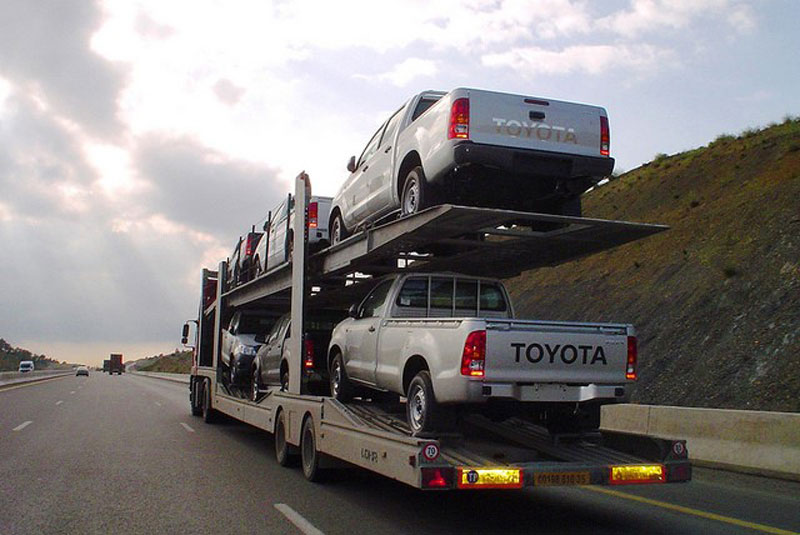
Air brakes are used in transport trucks as well as many school buses and other trucks for several reasons. The main reasons include the fact that using air lets several vehicles are coupled and since air is used, each individual vehicle has the capacity to brake when necessary. Air also allows the emergency brake system to be used in an effective was along with the parking brake system. Other types of brakes, such as hydraulic brakes that use liquid, would not be feasible to use with transportation trucks or in other large trucks that may haul multiple units coupled at one time. Air brakes are used for safety reasons and are a reliable braking system for large transport trucks. There are three braking systems combined in one in the system.
Service Brake: The service brake system applies and releases the brakes when the driver pushes down on the brake pedal inside the truck. This opens the valve to let air flow through the airlines to the brake chamber. This is the brake used during normal driving conditions.
Parking Brake: On the dash of the truck, the driver will pull a yellow valve to apply the spring brakes, or parking brakes. When the valve is pulled, air is released from the brake chamber thus expanding the brake spring and forcing the pushrod out that pushes a slack adjuster that turns the camshaft and forces the brake lining against the brake drum. This places the brake in place when the truck is parked at a standstill.
Emergency Brake: The emergency brake utilizes parts from both the parking brake and the service brake systems to stop the truck if the brake system fails. The way air brakes work is that air pressure is held inside the brake chamber which in turn, holds a very strong spring. If the pressure is not strong enough to hold the spring in place, the emergency brakes capture and hold it where it needs to be held for safety. If the pressure drops to 20 to 45 psi, the emergency brake will reflexively apply to allow the driver time to exit the roadway safely. In a situation where the emergency brake must be used, the truck will not be able to be guided for a far distance and must be able to exit the road quickly as the parking and emergency brake will only have power over the tandem axles.
Air Brake supply systems have several components that work together to ensure efficient braking capabilities for the truck. These components include:
- The air compressor that pumps air into the tanks of compressed air that power the entire braking system.
- The air compressor governor that distributes the air through the tanks at the appropriate times.
- The air tanks that store the air until needed for braking.
- The drain valves which can be used automatically or manually to release air from the tanks. This is necessary to eliminate grease, water and other contaminants that can enter the tank during a daily drive.
- The air supply gauge that shows the driver how much air in the air tank. It is vital for the driver to have the correct amount of air in the tank and if it begins to drop below the correct amount, it is the driver’s responsibility to make sure it is filled as needed.
While some transport trucks and carriers have hydraulic brakes, it is considered a safer option to use air brakes as they are considered a fail-safe system. With hydraulic brakes, a fluid leak can cause the brake system to fail and that will likely cause a crash because the truck will not be able to effectively stop. With air brakes, if the air pressure drops and the brakes are in a state that they would not be able to stop the truck, the truck will not be able to move at all until the air pressure has been repaired to the correct level. Transport truck drivers must be able to rely on the braking system in the truck as they are often carrying thousands of pounds of machinery, tools and other equipment and must be able to stop quickly and safely in traffic.